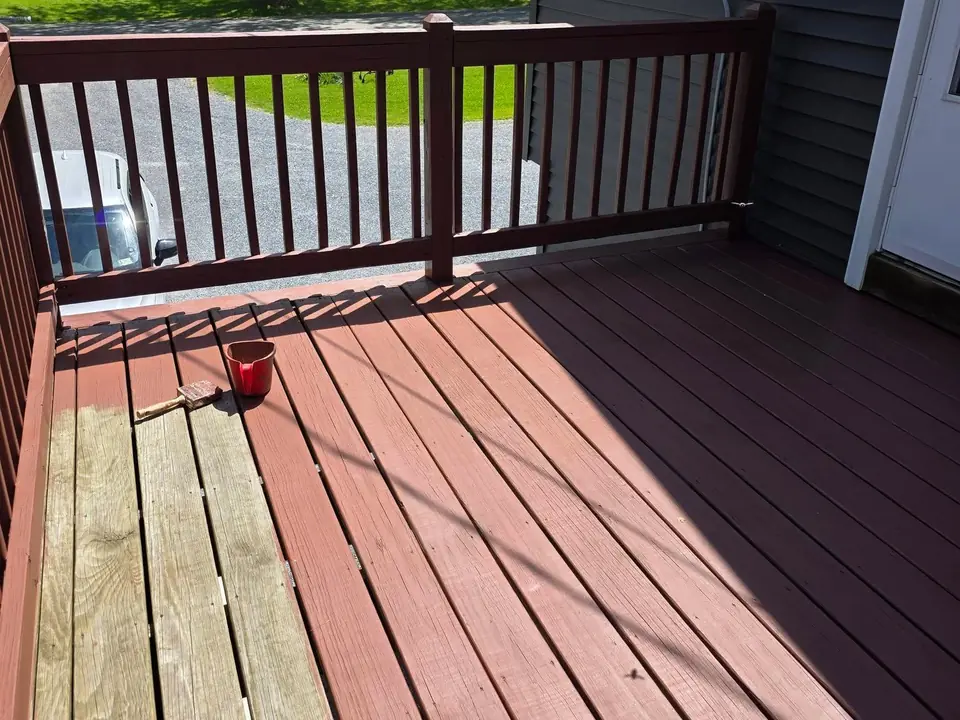
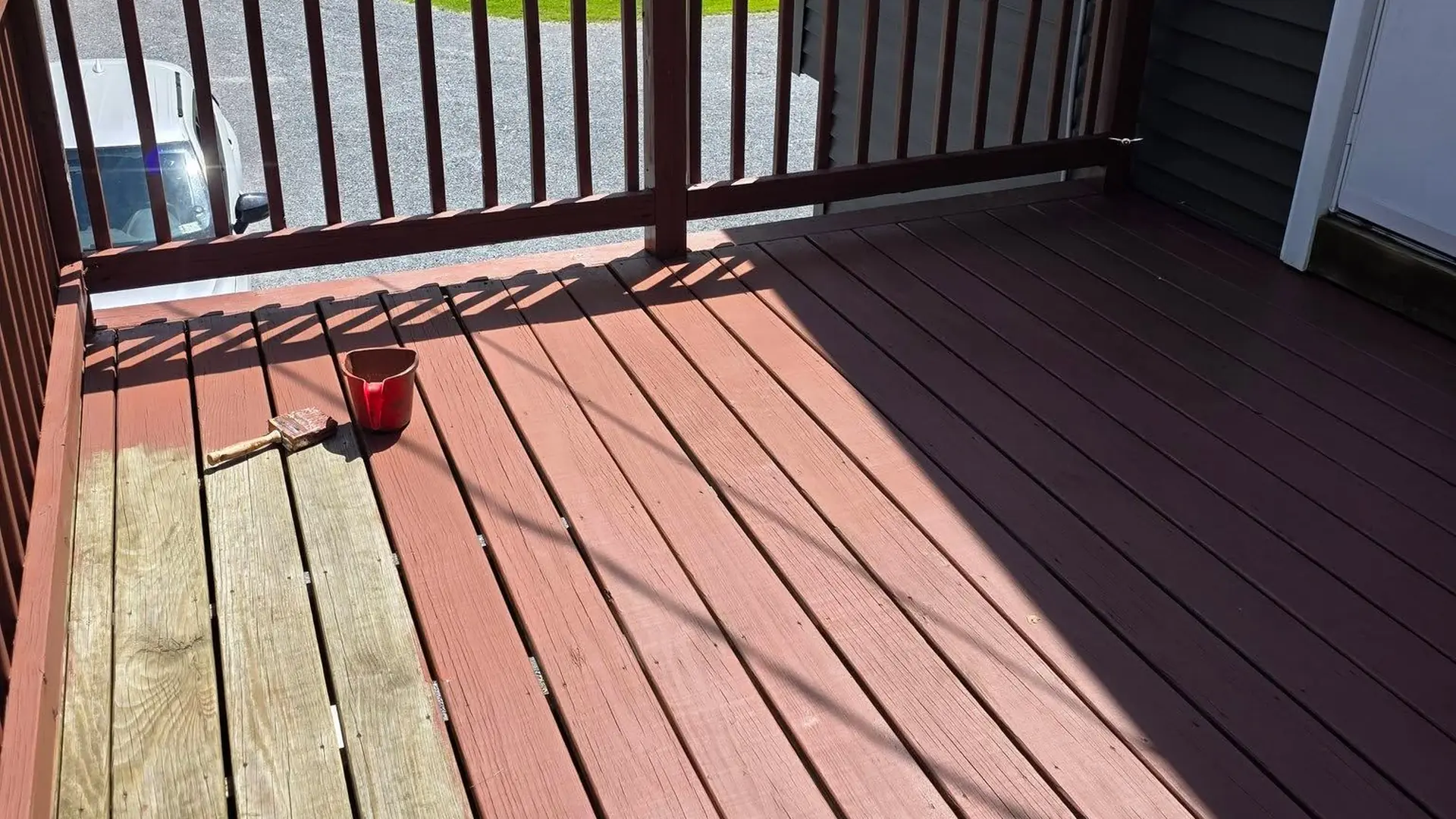
Untreated deck boards turn gray as UV rays break down lignin in the wood, absorb water that causes swelling and cracking, and splinter underfoot as fibers lift from freeze-thaw cycles. Deck staining and painting restores appearance and adds a protective barrier that slows moisture intrusion and blocks ultraviolet degradation. J.Lynn Painting handles deck projects in Poultney where outdoor wood needs more than a quick coat—it requires cleaning to remove embedded dirt and mildew, sanding to open grain or smooth rough spots, and application of products formulated to flex with wood movement through Vermont's temperature swings. After treatment, decks shed water visibly, maintain color longer, and feel smooth rather than catching socks or bare feet.
The process begins with cleaning using deck wash or pressure washing to remove grime, algae, and old finish residue, followed by sanding to knock down splinters and rough grain raised by cleaning. Stains penetrate into wood pores, providing UV and water resistance while allowing the grain to show, whereas solid-color deck paint forms a surface film that hides imperfections but requires more maintenance when it eventually wears. Product choice depends on whether you want natural wood appearance or complete color coverage.
Schedule an outdoor space evaluation to assess wood condition and discuss finish options suited to your deck's exposure and use. Speak with us →
What Proper Deck Finishing Requires
Deck finishing demands surface prep that addresses why previous coatings failed or why bare wood deteriorated. Power washing removes contaminants but must be done carefully—too much pressure damages soft grain, creating furry surfaces that absorb more stain than harder growth rings, leading to blotchy appearance. Sanding smooths raised grain and feathers edges where old finish remains, creating better adhesion for new coatings. Stains and paints designed for horizontal surfaces include mildewcides and UV blockers that vertical siding products often lack, since decks face constant moisture from rain, snow, and humidity with no drainage break.
Once deck staining or painting completes, you notice wood that darkens evenly rather than in patches, surfaces that bead water instead of soaking it in immediately, and boards that resist splintering when walked on barefoot. Railings feel smooth to the touch, stairs show consistent color across treads and risers, and the entire structure looks intentional rather than weathered. The coating slows the rate at which wood grays, reduces the frequency of sanding and refinishing, and prevents deep moisture penetration that leads to rot in boards and support posts.
Projects include cleaning, sanding, and finish application, but do not cover structural repairs, board replacement, or railing rebuilds—those happen before finishing begins. If your deck includes lattice, built-in planters, or attached benches, those components get treated as part of the project. Newly installed or replaced boards need weathering time before staining to allow mill glaze and moisture to escape, typically 30 to 60 days depending on wood species and weather exposure.